01 · Inclusion and access.
How can AI be useful across language, disability, connectivity and income barriers?
CHALLENGE 05 / 05 · HUMANITY
Artificial intelligence can expand opportunity, but its benefits and risks are never distributed automatically or equally. Who gets access? Who decides? Who can challenge an automated outcome? Mars Challenge 2027 invites young people to examine the human consequences of AI and design responses that strengthen dignity, agency and shared value.
How Much Intelligence Can the Planet Sustain?
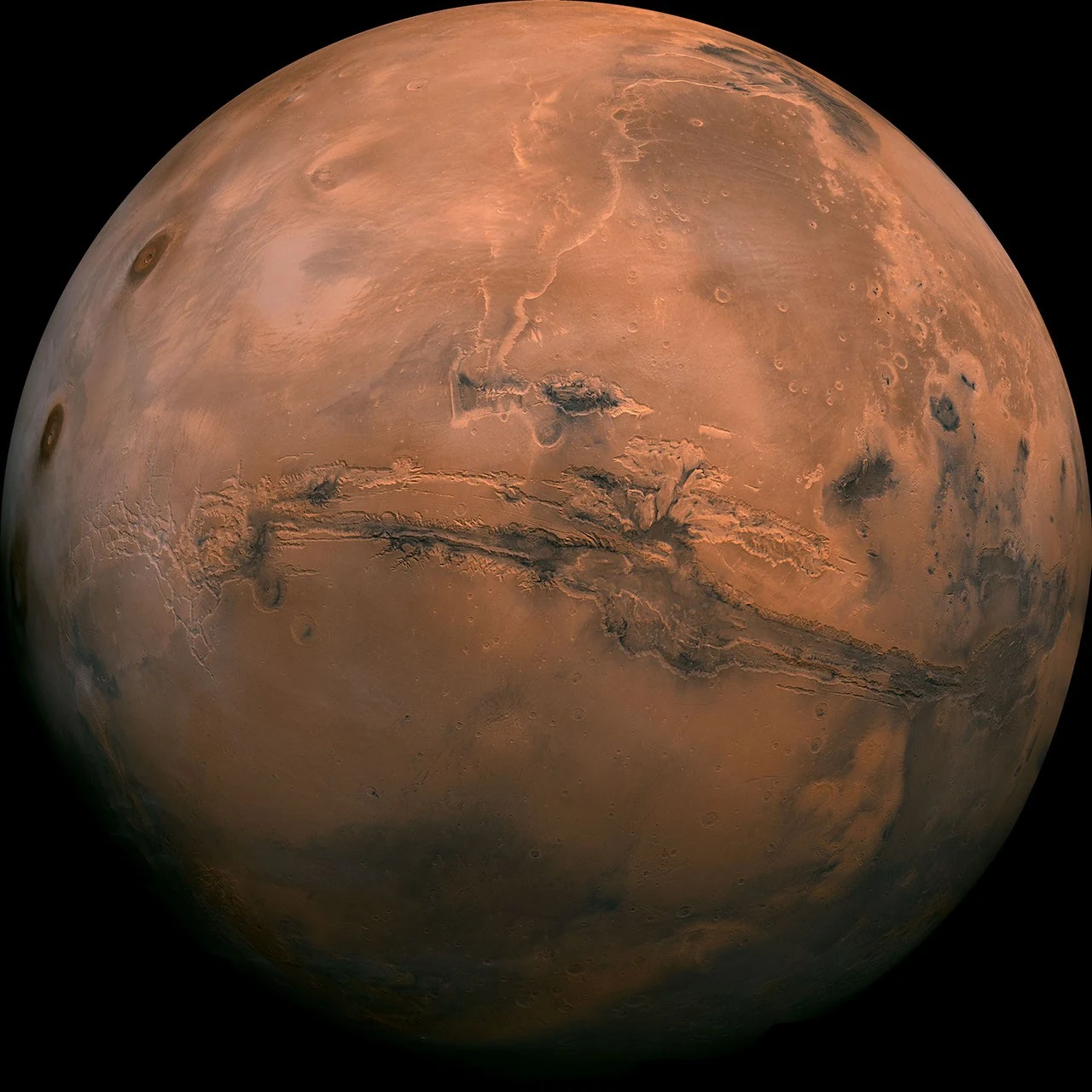
Mars is the challenge. Earth is the mission.
02 / HUMANITY
AI systems are embedded in education, employment, public services, healthcare and daily decisions. An apparently efficient solution may be inaccessible, opaque or unfair to the people it affects. The question is not simply whether a system works. It is whom it serves, whom it excludes and who remains accountable.
03 / HUMANITY
How can AI be useful across language, disability, connectivity and income barriers?
How can people understand, question and contest consequential decisions?
How can communities evaluate reliability, misinformation and the limits of automated recommendations?
How can AI support learning, judgement and capability without replacing meaningful human choice?
Who sets rules, measures harms and benefits, and participates in decisions about deployment?
04 / HUMANITY
Behind each interface are data choices, design assumptions, workers, infrastructures, institutions and people affected by its outputs. design → data → deployment → decision → consequence → review. At every stage ask: who has a voice and who bears the risk?
Connected system · conceptual diagram
05 / HUMANITY
In a Mars habitat, a life-critical decision cannot be delegated blindly to an opaque tool. People must understand limits, maintain oversight, share scarce resources and act together. Earth-Back Thinking uses this extreme scenario to stress-test transparency, access, resilience and human responsibility on Earth. Mars is not a prediction; it is a learning constraint.
Understand Earth
Apply Mars constraints
Design
Return to Earth
06 / HUMANITY
Possible exploratory projects include: an accessible public-service AI interface; a clear process for challenging an automated decision; a multilingual explanation tool with human escalation; a participatory community AI-impact assessment; or an educational activity that teaches when to verify algorithmic answers. These are examples, not prescribed solutions or official deliverables.
01 / Illustrative concept · not a validated solution
an accessible public-service AI interface
02 / Illustrative concept · not a validated solution
a clear process for challenging an automated decision
03 / Illustrative concept · not a validated solution
a multilingual explanation tool with human escalation
04 / Illustrative concept · not a validated solution
a participatory community AI-impact assessment
05 / Illustrative concept · not a validated solution
an educational activity that teaches when to verify algorithmic answers
Illustrative concept · not a validated solution
07 / HUMANITY
Computer science can investigate model behaviour. Law examines rights and due process. Psychology and education explore learning and trust. Design makes systems understandable and accessible. Economics questions incentives and distribution. Humanities contribute ethics and social meaning. Public policy examines accountability. A credible response needs several perspectives in dialogue.
08 / HUMANITY
PIONEERS helps young people explore possible futures and their capacity to decide. ORIGINALS brings university disciplines into responsible action. ANCESTRAL asks whose living knowledge and authority are recognised. NO HUMAN B™ tests participation beyond a single assumed cognitive norm. These are four paths into the same 2027 global challenge, not four separate competitions about AI.
09 / HUMANITY
Teams can frame an affected community and a concrete decision;
research users and constraints ethically;
map stakeholders and risks;
define safeguards;
prototype a service, policy or tool;
test accessibility and comprehensibility;
document trade-offs;
and explain who remains responsible.
These are suggested evidence areas, not confirmed mandatory 2027 stages or rubrics.
10 / HUMANITY
Schools and universities can create interdisciplinary investigation. Companies and technology organisations can contribute realistic use cases and responsible technical context. Governments and civil society can bring questions of rights, participation and public interest. Collaboration must preserve young people's authorship and avoid treating communities as test subjects.
11 / HUMANITY
Mars Challenge 2027 asks not only how much intelligence the planet can sustain, but what kind of intelligence humanity should choose to sustain. Explore HUMANITY alongside WATER, ENERGY, INFRASTRUCTURE and MATERIALS. Find your mission or begin an institutional conversation through verified participation channels. Official dates, eligibility, selection and application routes remain subject to confirmation.