
CHALLENGE 03 / 05 · INFRASTRUCTURE
The Cloud Occupies Territory.
Artificial intelligence may feel weightless. Its infrastructure is not.
Explore the question
Data centres occupy land, connect to power grids, consume resources, depend on digital networks and coexist with the people and ecosystems around them. Their location and design shape who receives benefits, who absorbs costs and how resilient essential services become.
Where should intelligence live — and what should it give back to the places that sustain it?
Infrastructure is not merely the building around the machines. It is part of the decision about what kind of artificial intelligence we choose to develop.
Mars is the challenge. Earth is the mission.
MARS CHALLENGE 2027
How Much Intelligence Can the Planet Sustain?
Mars is the challenge. Earth is the mission.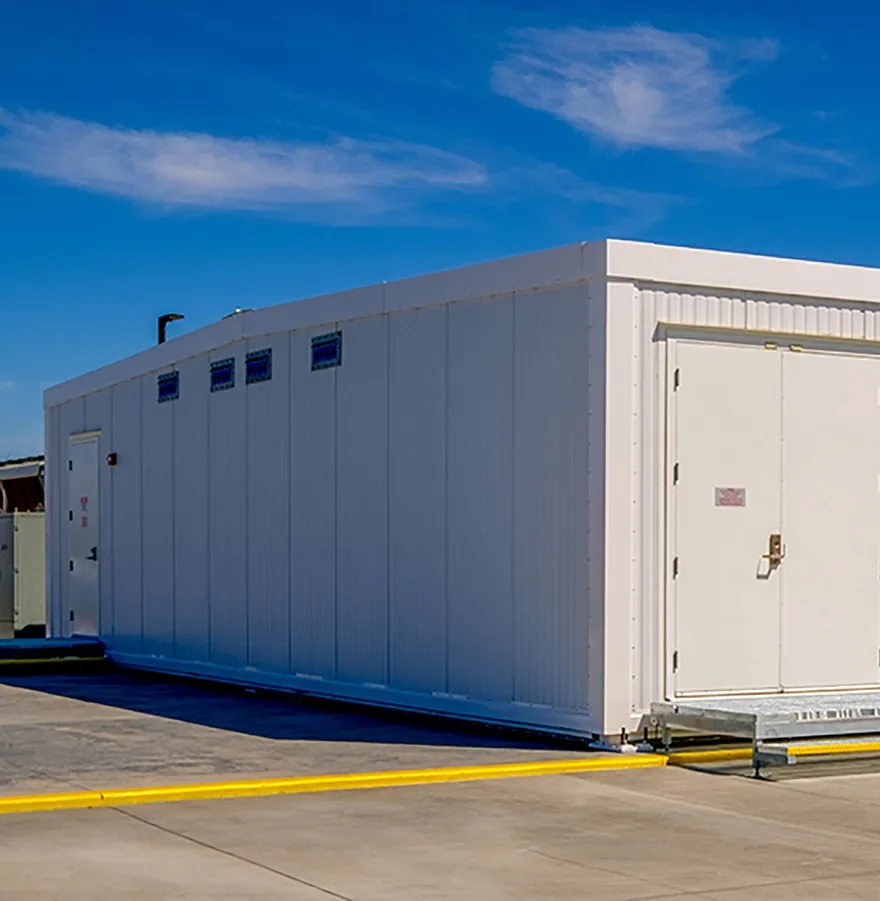

02 / INFRASTRUCTURE
The Cloud Has an Address.
An AI facility is a node in a larger physical system. It needs suitable land, electricity, cooling, connectivity, skilled operations, maintenance and governance. It is affected by climate, water stress, environmental requirements, security and the needs of the surrounding territory.
A site that is attractive in a technical model may be unsuitable when community priorities, grid constraints, water availability or ecological impacts are considered.
The infrastructure system at a glance:
Connected system · conceptual diagram
Territory
Land use, environmental sensitivities, nearby communities and competing needs
Connectivity
Fibre networks, latency, reliability and access to digital services
Energy
Available grid capacity, demand profile, backup and long-term resilience
Water and cooling
Local conditions, heat management, consumption and reuse opportunities
Facilities and operations
Modular design, maintenance, safety, security and continuity
Public value
Jobs, services, transparency, governance and benefits for host communities
03 / INFRASTRUCTURE
A Good Data Centre Is Not Automatically a Good Neighbour.
A reliable, efficient facility may still place pressure on local grids, water supplies, land or public trust. Conversely, a well-planned project can create opportunities for collaboration, resilient services, skills and shared infrastructure.
There is no universally ideal location or blueprint. Solutions depend on climate, demand, geography, infrastructure and the institutions involved. Teams must ask not only can this be built? but also should it be built here, this way, and for whose benefit?
Guiding question: How can infrastructure for AI be located, designed, operated and governed within real territorial limits while creating credible local value?
04 / INFRASTRUCTURE
Explore the Design Choices
Resilient architecture — What happens when something fails?
Territorial integration — How does a facility become a better neighbour?
Adaptable construction — Can infrastructure evolve rather than be replaced?
Infrastructure governance — Who decides and who is accountable?
05 / INFRASTRUCTURE
On Mars, Every System Depends on Every Other System.
A hypothetical Martian settlement cannot assume limitless land prepared for construction, immediate access to new equipment, abundant water or continuous external support. Life-support, power, communications, repair and habitat design are interdependent.
Mars Challenge uses these limits as a conceptual stress test, not as an assertion that terrestrial data centres should copy spacecraft.
Mars reveals dependencies. Earth determines whether a solution is valuable.
Understand Earth Which people, ecosystems and systems does a facility depend on?
Apply Mars constraints What if resources, repair capacity, connectivity and resupply were severely limited?
Design What can be made modular, efficient, resilient, repairable and useful beyond the facility itself?
Return to Earth Which design choices could work responsibly in a real location, under local rules and needs?

06 / INFRASTRUCTURE
What Could You Build?
These are illustrative project concepts, not mandatory solutions or documented results.
A credible project should explain its assumptions, what evidence is missing, whose input would be needed and how success could be tested. Not every proposal must involve coding.
01 / Illustrative concept · not a validated solution
Responsible site-selection atlas: a transparent multi-criteria map comparing candidate locations and highlighting unknowns, trade-offs and affected groups.
02 / Illustrative concept · not a validated solution
Modular resilient facility: a physical or digital prototype of a data-centre module that can recover from failures and be repaired or upgraded.
03 / Illustrative concept · not a validated solution
Community-benefit design: an infrastructure concept that tests whether heat, training, services or shared assets could provide locally defined value.
04 / Illustrative concept · not a validated solution
Infrastructure lifecycle passport: a traceability model for construction choices, components, maintenance and future reuse.
05 / Illustrative concept · not a validated solution
Public decision dashboard: a communication prototype that helps institutions compare water, energy, land and service impacts without hiding uncertainty.
Illustrative concept · not a validated solution
07 / INFRASTRUCTURE
Systems Need Many Kinds of Knowledge
Architecture and urban planning consider place and construction. Engineering and computing address power, cooling, networks and reliability. Environmental sciences examine resources and ecological effects. Economics assesses costs and incentives. Law and public policy address authorisation, rights and accountability. Design, psychology and communication help make choices understandable and participatory.
The future of AI infrastructure cannot be designed inside a server room alone.
- Engineering & computing
- Environmental sciences
- Economics & management
- Law & public policy
- Design & architecture
- Social sciences & humanities
08 / INFRASTRUCTURE
Make the Trade-offs Visible
Teams can structure their work around eight recommended evidence areas:
Define a specific infrastructure need, location or scenario.
Identify stakeholders, ecosystems and essential dependencies.
Gather evidence on energy, water, land, connectivity and risks.
Compare alternative site or design choices and record trade-offs.
Develop a proposal, model, simulation or prototype.
Test resilience and identify practical limitations.
Explain expected benefit and potential harm for people on Earth.
Present the reasoning, uncertainties, feedback and next iteration.
These are suggested learning outputs, not confirmed official 2027 submissions or scoring criteria.
09 / INFRASTRUCTURE
Infrastructure Connects Everything
The five challenges are the subjects of investigation. The four participation missions — PIONEERS, ORIGINALS, ANCESTRAL and NO HUMAN B — are distinct ways to engage with the same Mars Challenge.
WATER
Cooling and local water availability can shape where facilities are appropriate.
ENERGY
Grid access, demand, heat and resilience are inseparable from facility design.
MATERIALS
Concrete, steel, semiconductors, batteries and equipment have lifecycles and supply chains.
HUMANITY
Siting and governance affect rights, access, employment, trust and the distribution of benefits.
10 / INFRASTRUCTURE
A Shared Design Responsibility
Students and teachers bring inquiry, research and ideas. Universities and technical specialists can examine feasibility. Infrastructure operators may offer real constraints and informed critique. Public authorities and community organisations can highlight local needs, governance and long-term effects.
Collaboration must not imply endorsement, financing or a partnership that has not been formalised. Local communities should not be treated as an afterthought in the design process.
Participation notice: the educational theme is proposed for 2027, but dates, eligibility, rules, application status and partnership terms must be verified from official programme communications.
11 / INFRASTRUCTURE
The Future of AI Needs More Than Capacity. It Needs a Place in the World.
Every facility changes a landscape of resources, relationships and decisions. What if the next generation designed digital infrastructure to be useful not only to its users, but also to the places that sustain it?
Where should intelligence live — and what should it give back?