
Compute efficiency — Less energy per useful outcome.
Examine workload optimisation, model selection, equipment utilisation and measurement. Prompt: Can a useful task be completed with fewer resources without reducing needed quality?
CHALLENGE 02 / 05 · ENERGY
Every AI answer begins long before a response appears on a screen. It depends on electricity generation, transmission, computing hardware, cooling and human decisions about how resources are shared.
Explore the question
As artificial intelligence expands, how can we power useful intelligence without treating energy, grid capacity or local communities as unlimited?
Mars is the challenge. Earth is the mission.
How Much Intelligence Can the Planet Sustain?
Mars is the challenge. Earth is the mission.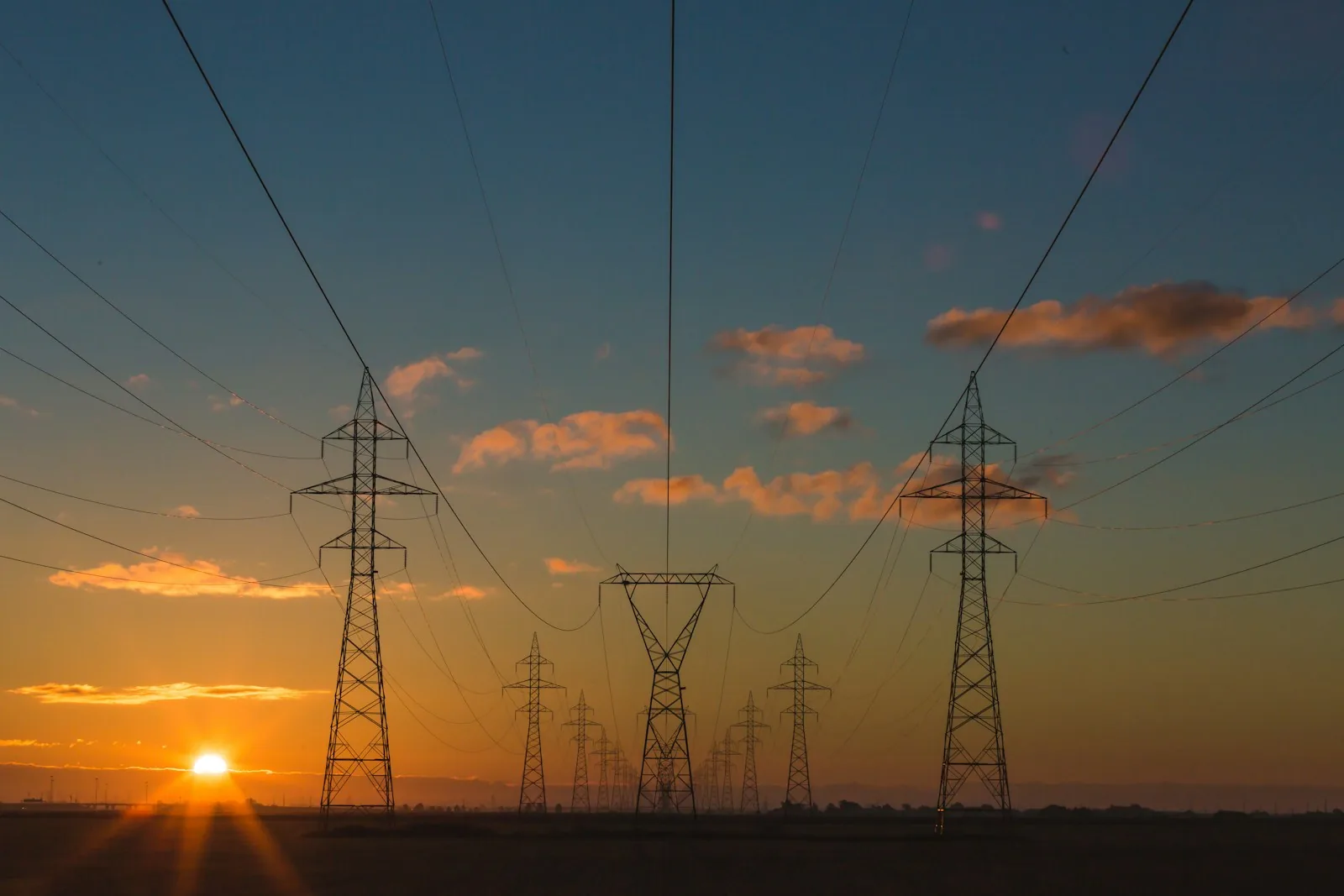
02 / ENERGY
AI is often discussed as code or computational performance. But every training run, inference workload and network transaction takes place inside a wider energy system.
Electricity must be generated, transported and delivered when computing facilities need it. Cooling and supporting equipment also use power. Local grid constraints, price volatility and environmental impacts shape what can responsibly be deployed.
Five connected lenses:
The goal is not to claim that all AI use has the same footprint. It is to understand the conditions that make particular uses more or less demanding.
Connected system · conceptual diagram
| Lens | The question to investigate |
|---|---|
| Electricity demand | When, where and how much power does a workload require? |
| Grid capacity | Can the existing network support new demand without undermining other needs? |
| Flexibility | Which tasks can shift in time or place without sacrificing essential service? |
| Resilience | How does a system operate when generation or supply is interrupted? |
| Useful heat | Can rejected heat become a local resource rather than an unmanaged by-product? |
03 / ENERGY
An efficient server does not automatically produce an efficient system. A low-carbon electricity supply is not automatically available at every hour. A facility that secures power can still affect grid expansion, land use, water, investment priorities and the communities around it.
In this challenge, teams investigate trade-offs instead of searching for a single magical technology. They ask which uses are worthwhile, how demand might be managed and what counts as a fair and credible energy decision.
Guiding question: How can AI services deliver meaningful value while respecting physical energy limits, local priorities and long-term resilience?
04 / ENERGY
Examine workload optimisation, model selection, equipment utilisation and measurement. Prompt: Can a useful task be completed with fewer resources without reducing needed quality?
Investigate scheduling, location and demand response for non-urgent workloads. Prompt: Which tasks can move to periods of greater clean-power availability?
Explore storage, microgrids, prioritisation and graceful degradation. Prompt: What must keep working when electricity is scarce?
Explore whether data-centre heat can meet an actual local demand, subject to temperature, distance, infrastructure and economics. Prompt: When is recovery useful, and when is it not?
Examine siting, affordability, transparency and trade-offs with other users. Prompt: Who decides which demands deserve scarce network capacity?
05 / ENERGY
A hypothetical Martian settlement operates with finite generation, storage, replaceable components and maintenance capacity. Critical systems compete for energy; failure has direct consequences.
Earth-Back Thinking translates that constraint into a design discipline:
Mars is a thought experiment and an extreme learning environment, not a claim that Martian equipment can simply be transferred to terrestrial grids.
Understand Earth What service needs energy, and who depends on it?
Apply Mars constraints What if capacity, storage, spares and supply reliability were limited?
Design the response What can be reduced, shifted, recovered, repaired or prioritised?
Return to Earth What would be technically, socially and economically useful here?
06 / ENERGY
Illustrative starting points — not mandatory projects or validated solutions:
A worthwhile response might be a hardware concept, algorithm, service, policy framework, analytical model or combined proposal. Teams must state assumptions and show how evidence could test them.
01 / Illustrative concept · not a validated solution
Energy-aware AI scheduler: a conceptual tool that aligns deferrable computing tasks with available electricity, tracking service quality and system constraints.
02 / Illustrative concept · not a validated solution
Resilient microgrid scenario: a simulation of how a critical learning or community service could prioritise loads during supply disruptions.
03 / Illustrative concept · not a validated solution
Heat-use feasibility map: an assessment of where computing waste heat might match a nearby heat demand and where constraints make it impractical.
04 / Illustrative concept · not a validated solution
Energy transparency dashboard: a prototype showing understandable resource-use and uncertainty indicators for a selected AI service.
05 / Illustrative concept · not a validated solution
Community trade-off model: a participatory framework comparing the benefits and costs of alternative infrastructure decisions.
Illustrative concept · not a validated solution
07 / ENERGY
Power engineering studies grids and generation; computer science investigates computation; economics addresses prices and incentives; environmental science evaluates resource effects; design clarifies how systems are experienced; law and public policy address accountability and rights. Social sciences help teams understand trust, distribution and community interests.
You do not have to build an AI model to contribute to the AI energy challenge.
08 / ENERGY
A team can make its work visible through eight recommended evidence areas:
Define the energy problem and its users.
Map supply, demand, dependencies and affected people.
Document evidence, uncertainties and alternative explanations.
Establish design criteria and explicit trade-offs.
Develop a testable proposal or prototype.
Compare scenarios and practical constraints.
Explain potential value and limitations on Earth.
Defend decisions, feedback and next iterations.
These are editorial guidance for investigation, not confirmed mandatory 2027 deliverables, scoring criteria or competition rules.
09 / ENERGY
The five challenges define what teams investigate; the four Mars Challenge missions define how participants enter the shared global experience.
Cooling and energy technologies depend on available water and local conditions.
Location, grid connection and facility design affect energy demand and access.
Batteries, cables, chips and power equipment depend on physical material supply chains.
Energy choices have consequences for affordability, fairness, safety and agency.
10 / ENERGY
Students and educators can investigate meaningful questions and build interdisciplinary proposals. Energy and technology organisations may contribute expertise and real constraints. Universities, public institutions and communities can help examine feasibility, governance and local consequences.
This page is an educational exploration hub. It is not an official call for applications. Dates, eligibility, participation requirements, selection and partner arrangements for 2027 must be checked against published programme rules.
11 / ENERGY
The question is not only whether we can power more computation. It is whether we can make better decisions about the systems, places and people that power it.
What does an answer cost — and who should decide whether it is worth it?