Universidad Fidélitas
Hosted the Costa Rican phase in 2024. Sibú won the 2025 international final, while AEGIS M4RS was selected in the 2026 national phase, without anticipating the international result.
Projects are the unit of evidence. Stories, institutions, countries, reports and recognition are published when they can be verified.
FROM QUESTION TO EXPERIENCE
In Getafe, Chihuahua and other territories, ideas leave a trail to explore: teams, projects, institutions and sources. Discover the 2027 edition and the work already done.
Explore four documented Reto Marte 2023 projects. The catalogue will keep growing until it includes every project.
ImpactExplore the changes Mars Challenge observes, how we document stories and projects, and what each piece of evidence supports.
Accounts with authorship, sources and authorization.
No documented records have been published yet.
Institutional participation supported by documentation.
Institutions documented through specific editions, projects and events. Each entry describes the scope of participation and links to its source; inclusion here does not imply a contractual partnership.
Read the Universidad Fidélitas institutional case study
Hosted the Costa Rican phase in 2024. Sibú won the 2025 international final, while AEGIS M4RS was selected in the 2026 national phase, without anticipating the international result.
Organised the Colombian phase in Medellín with Virtual Educa. Equilimind won the national phase with a proposal addressing mental health in Mars and Earth settings.
Brought students together for the Ecuadorian phase of Reto Marte. RED GAIA won that phase with a proposal using radiotrophic fungi to reduce radiation in enclosed spaces.
Participated in Reto Marte 2023 and attended the international final in Guayaquil. One student received the individual «Persona de Valor» recognition; this is not presented as an institutional award.
Helped prepare the Puerto Rican phase with the Department of Education, involving university faculty, school teachers and students. The source describes the route towards the international final.
Its Environmental Management and Renewable Energy programme and CAYEI organised «La Magia del Agua», an online preparation event for Reto Marte 2024 focused on water.
On 8–9 September 2026, UNACH brought together 180 students and 30 faculty mentors from 18 of its academic units in Chiapas. Mars-BioGrows (Team 23) won the UNACH phase with a biodigester prototype for sustainable resource use; the team was announced to represent the university at the planned international final in Spain.
Its Team 22 placed first in the 2026 Chihuahua final and was announced for the international final. That result belongs to the territorial phase.
Placed second in the documented 2026 Chihuahua final. This entry is limited to that territorial result.
Instituto Tecnológico de Chihuahua placed third in the 2026 Chihuahua territorial Reto Marte stage.
Universidad Tecnológica de Camargo placed fourth in the 2026 Chihuahua territorial Reto Marte stage.
Universidad Tecnológica de la Babícora placed fifth in the 2026 Chihuahua territorial Reto Marte stage.
IES José Hierro students took part in the 2026 national Reto Marte stage at ALEF Getafe, where school and university teams presented projects.
IES Altair students joined the 2026 national Reto Marte stage in Getafe alongside other schools and UC3M.
IES Laguna de Joatzel teams joined the 2026 national stage in Getafe and presented projects to a multidisciplinary jury.
IES Satafi students were among the participants in the 2026 national Reto Marte stage hosted by ALEF Getafe.
Universidad Carlos III de Madrid was represented at the 2026 national Reto Marte stage in Getafe, alongside secondary-school teams.
Politécnico de Portalegre students presented Huglow at Mars Challenge 2025. Savannah Rosa received an individual distinction; Paulo Campos joined the winning team in the multinational stage.
Verified territorial presence without inferred lists.
On 24 March 2026, Virtual Educa published a list of 20 universities and institutes that had confirmed their intention to take part in the Chihuahua stage. The announcement records the commitment reported at that time; it does not establish that each institution went on to compete.
A Chihuahua Government article published on 31 May 2026 documents these results from the state final:
Four of these institutions appear in the initial list of 20. Tecnológico de Monterrey does not appear on that list and is included here solely because its state result is documented; these placements are not international results.
The other 16 institutions named in the announcement: Universidad Autónoma de Chihuahua (UACH); Universidad Tecnológica de Chihuahua (UTCH); Universidad Tecnológica de Chihuahua Sur (UTCH Sur); Universidad Politécnica de Chihuahua (UPCH); Instituto Tecnológico de Chihuahua II (Tec II); Universidad Autónoma de Ciudad Juárez (UACJ); Universidad Tecnológica de Ciudad Juárez (UTCJ); Instituto Tecnológico de Ciudad Juárez (ITCJ); Universidad Tecnológica Paso del Norte (UTPN); Universidad Tecnológica de Paquimé (UTP); Universidad Tecnológica de Parral; Instituto Tecnológico de Parral; Instituto Tecnológico de Cuauhtémoc; Instituto Tecnológico de Jiménez; Instituto Tecnológico de Delicias; Universidad Tecnológica de la Tarahumara. They were named in the 2026 participation announcement; the source does not individually establish that all went on to participate.
Read the Virtual Educa announcement · Read the Chihuahua Government results · See the documented entries under Institutions → Mexico → Chihuahua
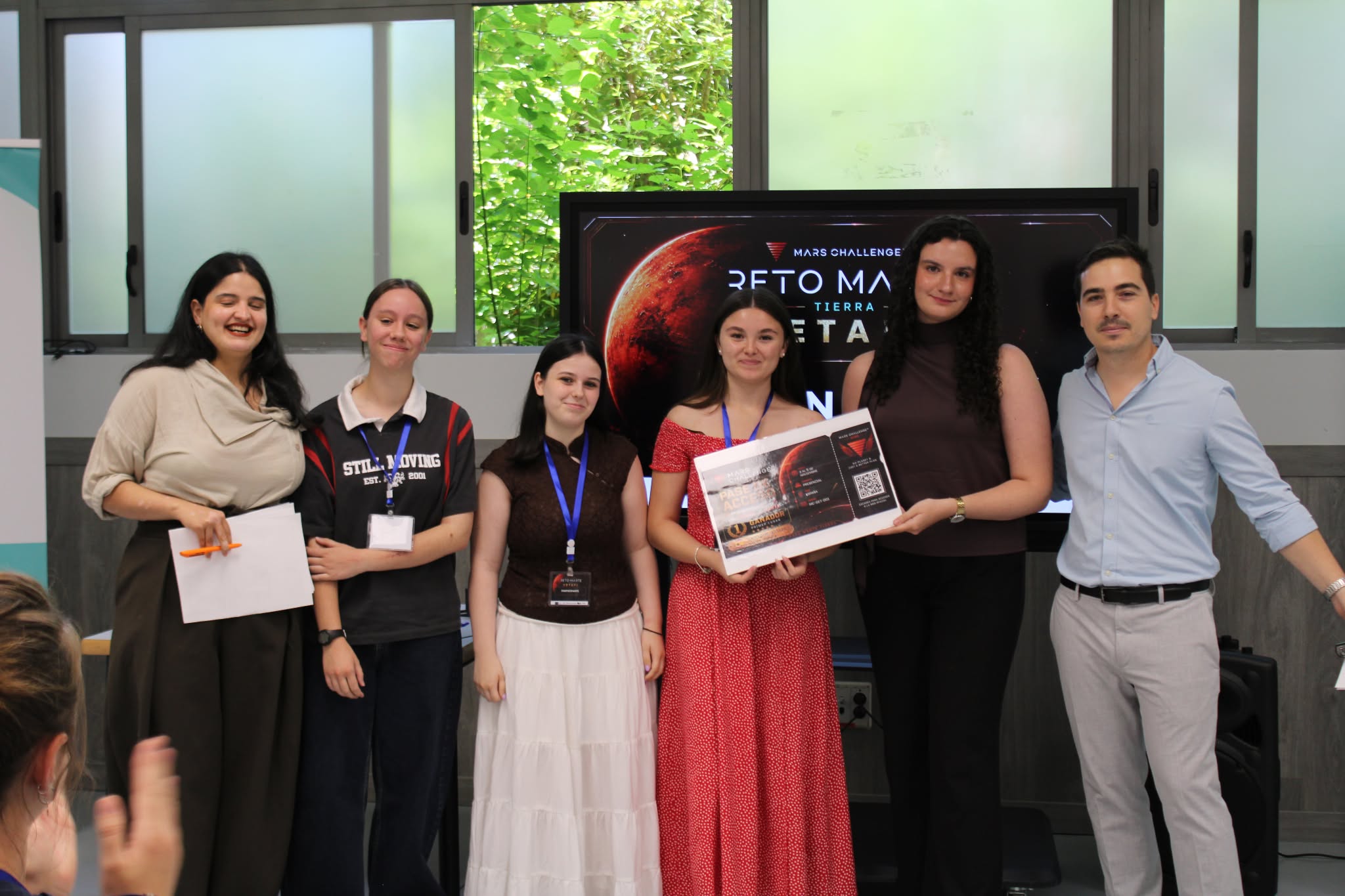
The 2026 national Reto Marte stage in Getafe brought together 12 teams from IES José Hierro, Altair, Laguna de Joatzel, Antonio López and Satafi, and Universidad Carlos III de Madrid. Getafe City Council promoted the initiative through its Education department, ALEF and GISA, in collaboration with Virtual Educa; ALEF hosted the event.
The jury selected five finalist teams. The municipal report names the first-place team: Hexágono Circular from IES Antonio López, selected to represent Spain at the international final. That selection does not establish an international result. The published project catalogue also presents teams associated with IES Satafi, IES Altaír and UC3M, without assigning them a placing in this national stage.
Read the Getafe City Council report · Explore Hexágono Circular and the published projects · See the documented entries under Institutions → Spain → Getafe
Results with a period, method and limitations.
No documented records have been published yet.
Name, organization and exact status backed by a source.
No documented records have been published yet.
Learning does not end with a presentation. Projects, outcomes and new questions connect one mission to the next.
2027The 2027 edition proposes redesigning artificial intelligence within the planet’s physical, environmental and human limits. Mars acts as a stress test to investigate a real tension and propose a responsible return to Earth.