
Mars ChallengeSearchParticipate

FIFTH INTERNATIONAL EDITION · MARS CHALLENGE 2027

How Much Intelligence Can the Planet Sustain?

Artificial intelligence is transforming our world. But the future of AI depends on resources no algorithm can create: water, energy, infrastructure, materials and people.

The question behind the challenge

Mars Challenge is an international, interdisciplinary educational experience. Participants investigate this question and apply the extreme constraints of Mars to develop skills and create responses to real challenges on Earth.

What happens when intelligence continues to grow, but the planet's resources remain finite?

Mars is the challenge. Earth is the mission.

Five connected challengesWhat we investigate

Four ways to participateHow we participate

Five connected challenges. Four ways to participate. One planetary question.

AI HAS A PHYSICAL WORLD

Artificial Intelligence Is Not Just Software.

A model. An app. A response on a screen. AI can look immaterial, but behind it are data centres, electricity, cooling, minerals, supply chains, land and human decisions. Every new capability carries demands and consequences.

AI is a system of systems. Improving one element while ignoring the others can shift the problem rather than solve it.

As automated answers become easier to produce, human judgement becomes more important: which problems deserve attention, what trade-offs are acceptable, and who is responsible?

ONE QUESTION. FIVE CHALLENGES.

Choose a Problem Worth Solving.

No team must solve everything. Each challenge provides an entry point into a connected system. Explore one question — and discover its links to the others.

01 / 05Water

Water

Artificial Intelligence Is Thirsty.

What happens when computing systems require water that people and ecosystems also need? Investigate cooling, closed loops, consumption measurement and water-stressed territories.

  • Cooling
  • Closed loops
  • Water stress

Possible response: A water-monitoring system or a closed-loop cooling proposal.
Explore Water
02 / 05Energy

Energy

What Does an Answer Cost?

Every intelligent response requires physical energy. Explore efficiency, grid capacity, storage, flexible workloads, resilient microgrids and heat reuse.

  • Efficiency
  • Flexible workloads
  • Heat reuse

Possible response: An adaptive workload scheduler or a heat-recovery concept.

Explore Energy
03 / 05Infrastructure

Infrastructure

The Cloud Occupies Territory.

Where should data centres and AI infrastructure operate? Explore land use, resilience, modular design, local infrastructure and community benefits.

  • Siting
  • Resilience
  • Community value

Possible response: A location-assessment model or an integrated data-centre design.

Explore Infrastructure
04 / 05Materials

Materials

Intelligence Has a Body.

AI exists through chips, servers, cables, batteries and minerals. Explore longevity, critical materials, repairability, reuse and traceability.

  • Repair
  • Reuse
  • Traceability

Possible response: A modular hardware proposal or a materials passport.

Explore Materials
05 / 05Humanity

Humanity

Intelligence for Whom?

Who benefits, who decides, and who may challenge an automated decision? Explore inclusion, skills, digital rights, trust, governance and shared value.

  • Access
  • Rights
  • Governance

Possible response: An inclusive public-service interface or a model for contesting automated decisions.

Explore Humanity

These are five dimensions of one challenge, not five independent competitions.

WHY MARS CHANGES EVERYTHING

Earth's Problems. Mars' Constraints. Solutions for Humanity.

Mars exposes assumptions we can overlook on Earth. Water cannot be taken for granted. Energy may be intermittent. Materials cannot be casually replaced. Infrastructure and human wellbeing are interconnected.

This is Earth-Back Thinking: use an extreme environment as a conceptual stress test, then return to real needs on Earth.

  1. Understand

    Investigate a real problem on Earth.

  2. Constrain

    Apply relevant constraints inspired by Mars.

  3. Design

    Develop and test a response.

  4. Return

    Translate lessons into potential value for Earth.

The purpose is not to create AI only for space. It is to ask what we would design differently if limits, circularity and responsibility were impossible to ignore.

Explore Earth-Back Thinking

01 / LEARNING FOR THE UNKNOWN

The future doesn't come with instructions.

We do not use Mars to escape Earth's problems. Its limits make us question what we take for granted and decide what to do when no ready-made answer exists.

See how Mars becomes a learning method

Five connected challenges · Choose a starting point

  1. 01Water
  2. 02Energy
  3. 03Infrastructure
  4. 04Materials
  5. 05Humanity
  1. Question

    What do we assume about water, energy, materials and people?

  2. Work within limits

    Test an idea when resources cannot be treated as infinite.

  3. Imagine alternatives

    Bring disciplines together to explore paths that are not yet obvious.

  4. Decide with judgment

    Explain the consequences, the limits and the potential value for Earth.

Mars Challenge turns uncertainty into an educational experience: learning to ask questions, build proposals and defend decisions for futures we do not yet know.

WHAT COULD YOU BUILD?

You Don't Need to Solve Everything. Solve Something That Matters.

Mars Challenge welcomes many forms of responses: a physical prototype, a digital tool, a service, a new policy, an infrastructure concept or a combination of approaches. You do not need to build a new AI model or know how to code to contribute.

Illustrative starting points

Water: Compare water use across computational scenarios.

Energy: Shift computing workloads according to energy availability.

Infrastructure: Propose reuse of data-centre heat for surrounding needs.

Materials: Design for component repair, reuse and traceability.

Humanity: Improve access to essential services for people facing language or connectivity barriers.

These are illustrative starting points, not assigned solutions. What matters is evidence, clear reasoning, feasibility, responsible trade-offs and tangible relevance to Earth.

EVERY DISCIPLINE HAS A ROLE

The Future of AI Cannot Be Designed by One Discipline Alone.

You don't need to study AI to help shape its future. Complex problems require people who can bring different knowledge into a common decision without losing the depth of their disciplines.

How the disciplines contribute

Engineering and computing examine technical performance. Environmental sciences study ecological boundaries. Economics asks about viability. Law and public policy examine rights and accountability. Psychology and education illuminate behaviour and learning. Design and architecture shape experiences and spaces. Humanities investigate meaning and ethics. International relations studies cooperation.

  • Engineering & computing
  • Environmental sciences
  • Economics
  • Law & public policy
  • Psychology & education
  • Design & architecture
  • Humanities
  • International relations

FOUR MISSIONS. ONE GLOBAL CHALLENGE.

Different Ways to Enter the Same Global Question.

The five challenges define what we investigate. The four missions define how people enter the experience.

PIONEERS

Discover Before You Decide.

For young people before higher education: explore strengths and possible futures through real problems and action.

Explore PIONEERS

ORIGINALS

Knowledge Meets Reality.

For universities: bring disciplinary depth into uncertain challenges, interdisciplinary judgement and responsible action.

Explore ORIGINALS

ANCESTRAL

Living Knowledge. Shaping What Comes Next.

For Indigenous living knowledge systems and community-led participation: bring memory, territorial understanding and legitimate knowledge authority into future-making.

Explore ANCESTRAL

NO HUMAN B™

Different Minds. Same Mission.

A neuroinclusive route into the same demanding challenge, designed for different ways of processing, collaborating and demonstrating capability. This mission is part of Mars Challenge’s alliance with NO HUMAN B™, an independent project.

Explore NO HUMAN B™

FROM QUESTION TO PROTOTYPE

From an Open Question to a Defensible Solution.

Teams investigate, combine evidence and perspectives, decide under constraints, prototype and learn from feedback. The proposed 2027 framework suggests documenting eight areas:

These are recommended evidence areas, not confirmed mandatory deliverables or final assessment criteria for 2027.

  1. Problem and evidence

    What matters and why?

  2. System map

    What dependencies and consequences surround it?

  3. Design criteria

    What must a responsible solution achieve?

  4. Proposed response

    What do we intend to change?

  5. Prototype or demonstration

    What can be examined or tested?

  6. Feasibility

    Which limitations and assumptions remain?

  7. Earth-Back return

    What benefit might transfer to Earth?

  8. Public defence

    What decisions and learning can the team explain?

EDUCATION, INDUSTRY AND SOCIETY

Real Problems Need More Than One Kind of Institution.

  • Schools and universities

    create opportunities for research, critical judgement and experiential learning.

  • Industry and technology organisations

    can bring real operating constraints and expertise.

  • Governments and territories

    can connect innovation, education and public responsibility.

  • Foundations and international organisations

    can help broaden equitable access.

The value of collaboration is not logo visibility. It is the chance to connect real questions, real knowledge and real consequences — while respecting youth authorship and educational independence.

02 / THE CHALLENGE IN PLACE

One global challenge. Answers shaped by each territory.

A planetary question changes scale when students, educators and institutions explore it in their own context. Getafe and Chihuahua show two documented journeys with different scopes.

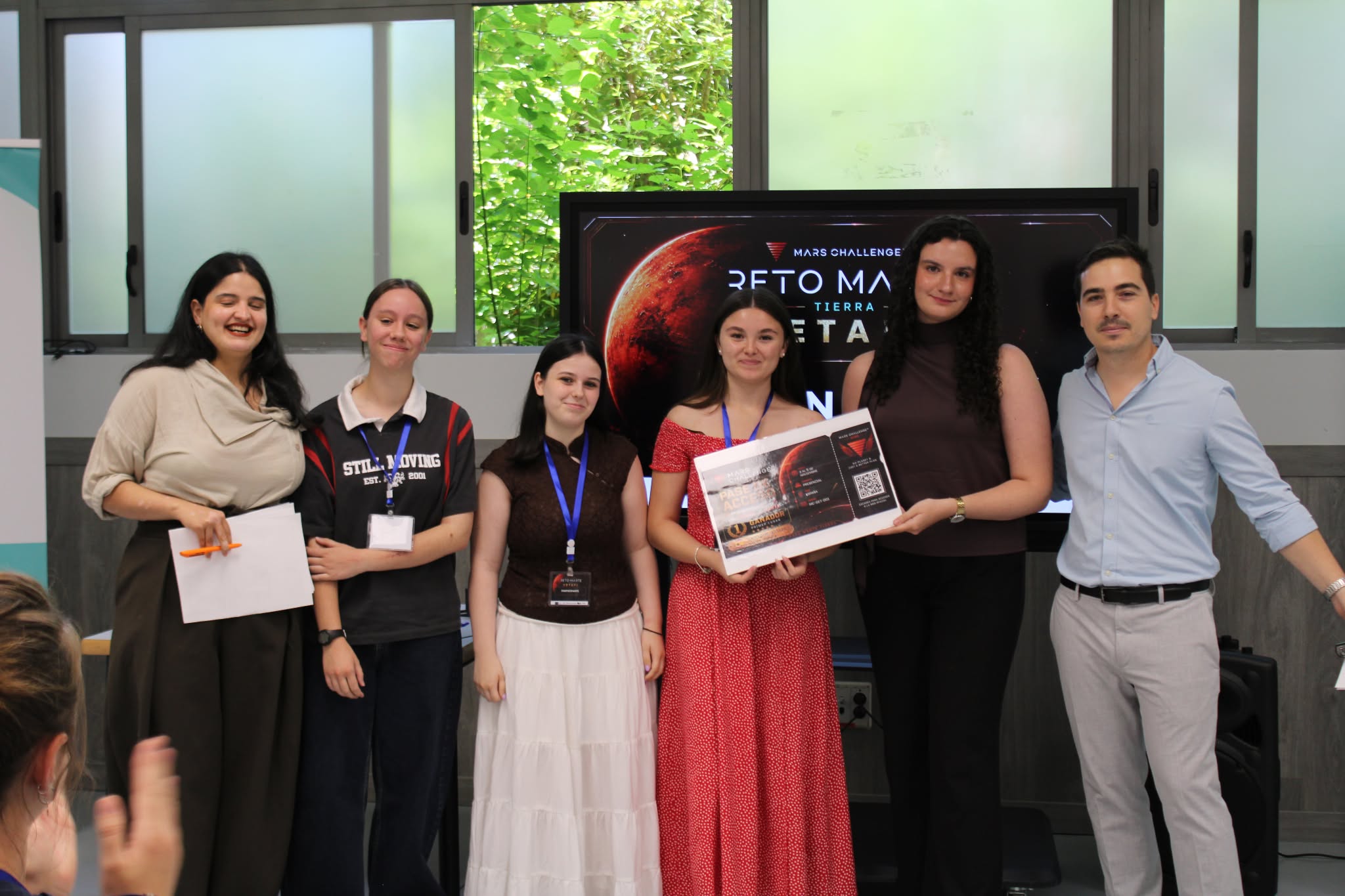
Participants in the 2026 Reto Marte national stage in Getafe show an award to the group.
Getafe, 2026 · documented national stage

Two territories, different ways to work on the same question. The territorial summaries link each journey to its sources, institutions and results.

Discuss institutional collaboration

03 / PEOPLE BEHIND THE IDEAS

The future needs people willing to imagine it.

A project begins when someone chooses a problem worth facing. These three stories from different editions show real proposals and teams, with possibilities still open to investigation.

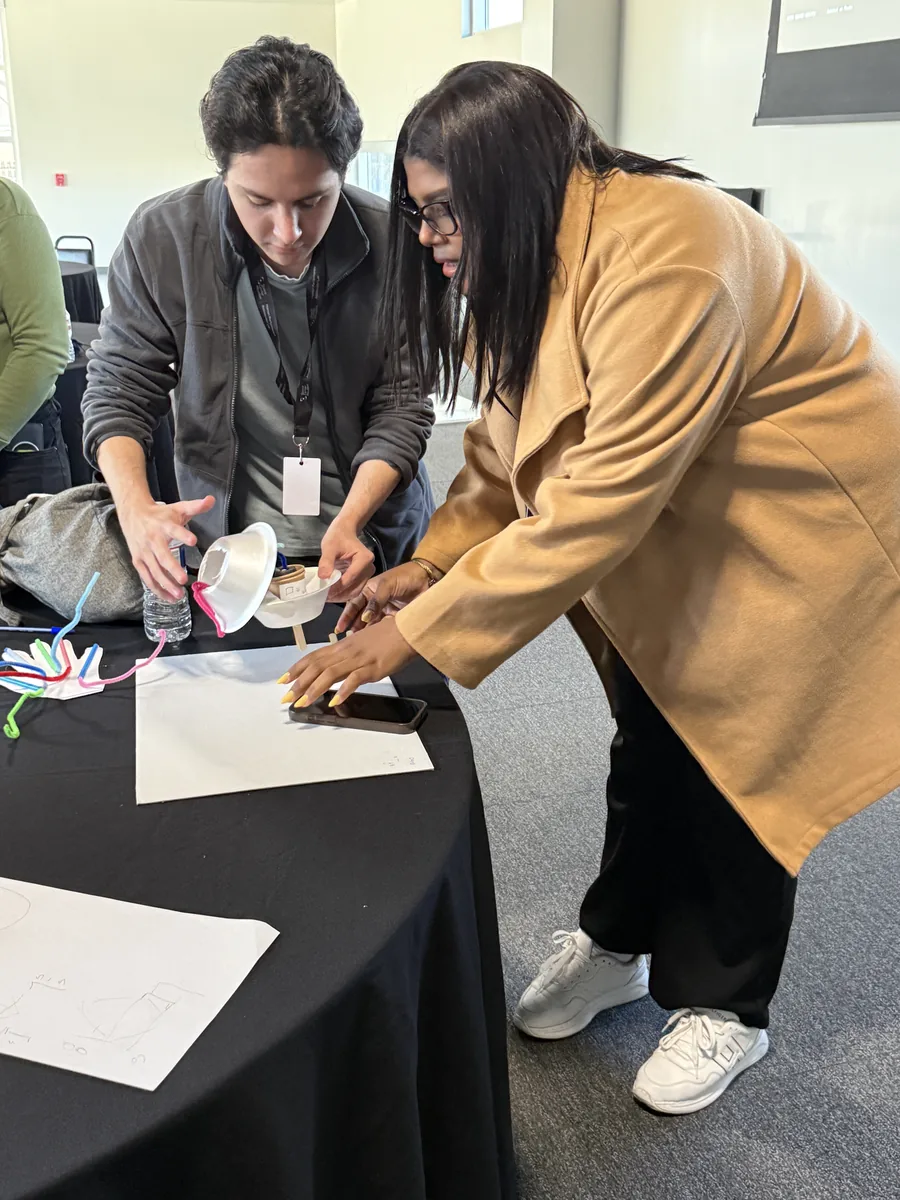
Two participants work together in a practical Mars Challenge activity in Houston.
Learning together also means testing ideas in practice.
  1. Equilimind

    How might a long mission protect mental well-being?

    A Colombian team connected emotional assessment, biometrics and physiological signals in a proposal to explore well-being under extreme conditions.

    Meet Equilimind
  2. Sibú

    Could algae inspire a system for producing oxygen?

    Engineering and psychology students from Universidad Fidélitas developed a proposal for an automated algae bioreactor and won the international final in Spain.

    Meet the Sibú team
  3. Hexágono Circular

    How do you create a habitable place when almost everything is scarce?

    Students from IES Antonio López García imagined a response to living within constraints. They placed first in Getafe and were selected to represent Spain; no international result is implied.

    Explore the project

Your next question could start here.

Find your place

04 / YOUR PLACE IN THE CHALLENGE

The future is built by people and institutions together.

A university, a city, a country or a company can create conditions for more young people to investigate and build. Explore the right route before talking with the team.

Discuss a collaboration

THE ROAD TO MADRID 2027

One Global Challenge. An International Convergence in Madrid.

The fifth international edition is planned to culminate in a global convergence in Madrid, bringing together participants, projects, educators and partners. The journey — research, decisions, prototypes and learning — matters as much as the final encounter.

MADRID2027Planned convergence

2027 participation and calendar: Detailed schedules, application windows, eligibility, selection, travel and safeguarding provisions remain subject to official confirmation. An expression of interest does not constitute a formal application or guarantee selection.

MARS CHALLENGE 2027 · THE INVITATION

The Future of AI Is Not Only a Technology Question.

It Is a Question About the Planet We Want to Live On.

Ask better questions. Bring separated knowledge together. Challenge assumptions. Design within limits. Bring learning back to Earth.

How much intelligence can the planet sustain?

Mars is the challenge. Earth is the mission.

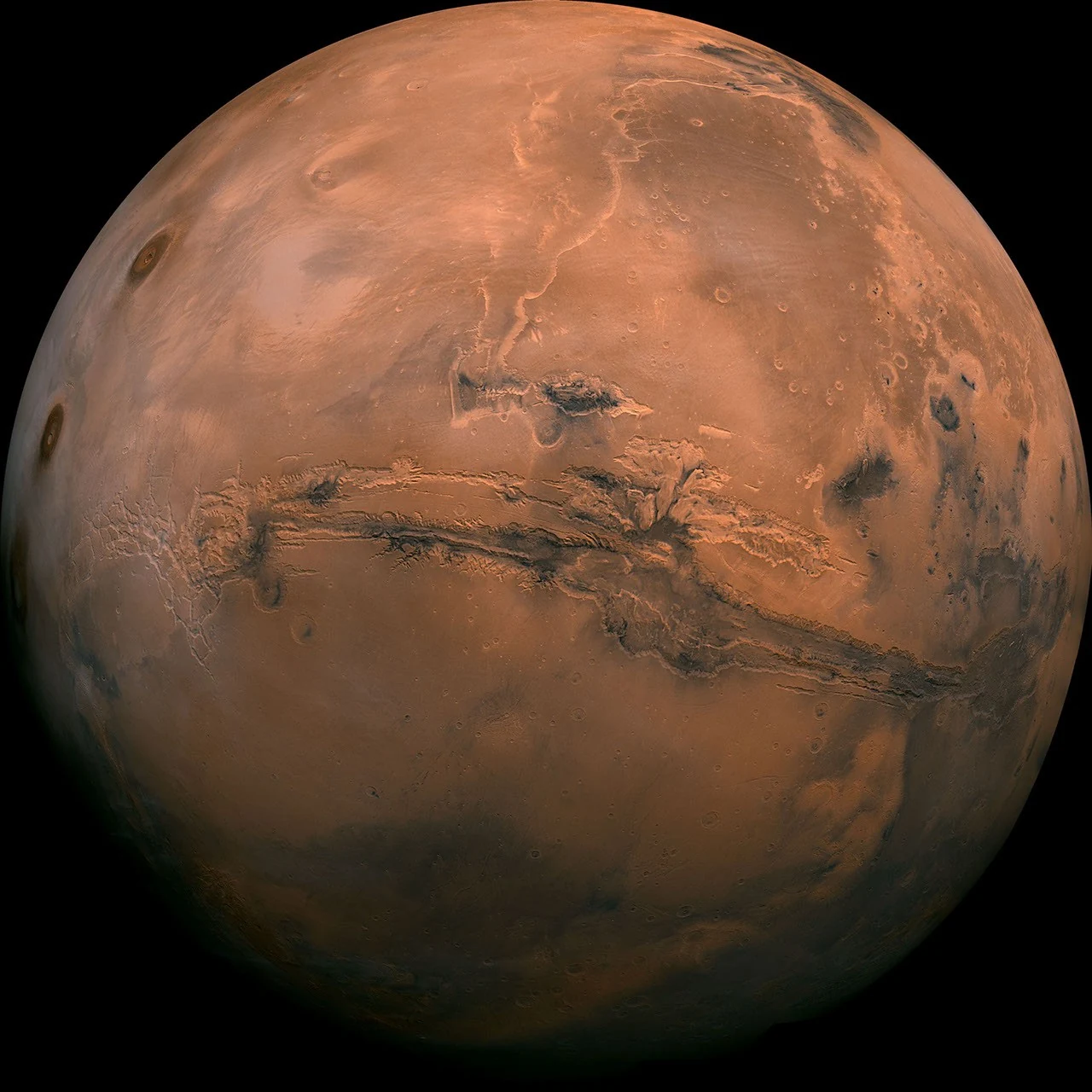
Astronomical imagery:NASA/JPL-Caltech · NASA Johnson Space Center / Apollo 17

Prototype drawings: illustrative concepts, not completed projects.