
Biometrics and AI
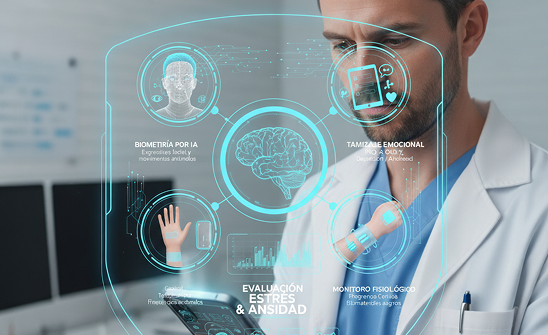
Proposed analysis of facial expressions and body movements.
A Colombian team proposed bringing together biometrics, psychological assessment and physiological signals to explore mental wellbeing in extreme conditions.
01 · The challenge
The 2023 challenge asked how six people could survive for two years on Mars. Equilimind focused its proposal on stress, isolation and the crew’s psychological wellbeing.
02 · The solution
The proposal combines three approaches within one system. Its project page describes the concept and its aims; it does not establish clinical validation or an operational product.
Proposed analysis of facial expressions and body movements.
Psychological screening using questionnaires such as PHQ-2 and GAD-7.
Proposed tracking of cortisol, temperature and heart rate.
The team envisages digital support resources informed by these signals, including music, mindfulness and virtual reality.
03 · Earth-Back Thinking
The Mars–Earth connection lies in the question: what can we learn about caring for the mind as isolation and pressure increase?
Explore wellbeing monitoring for a crew during extended missions.
Investigate potential applications in isolation, occupational health and community wellbeing.
Potential applications described by the team, rather than measured impact outcomes.
Historical project · 2023 edition
The team proposes a research and entrepreneurship unit focused on mental wellbeing in critical environments. The original page presents it as a conceptual company.
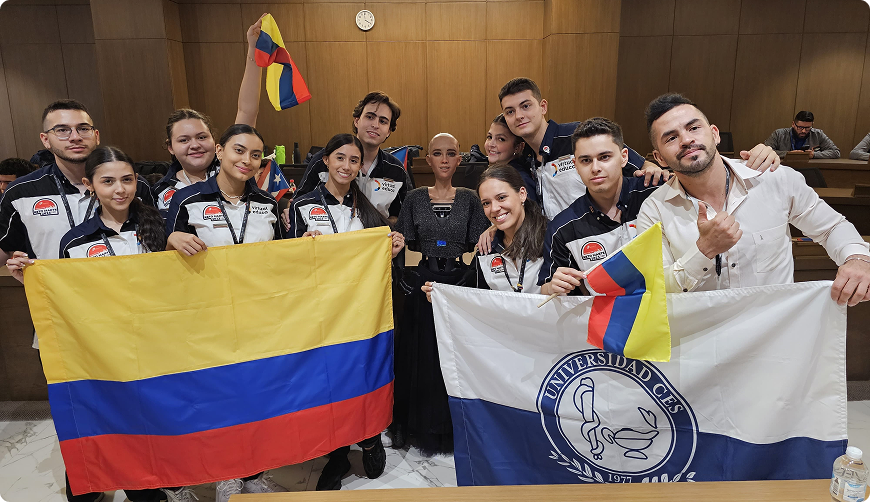
04 · Colombia
Nine members bringing different areas of knowledge to the same question.
Clinical psychology and mental health
Biomedical engineering
Nursing
Nursing
Neuroscience and applied psychology
Secondary education
Biotechnology engineering
Veterinary medicine and animal science
Physiotherapy
Project and authorship: the Equilimind team. Country: Colombia. Edition: Reto Marte 2023. Recognition: national winners, according to the original Mars Challenge project page.
This is a descriptive presentation. It preserves author credit, does not reproduce technical documentation and does not attribute clinical or commercial outcomes.
View the original project page ↗Connect the project with the method, discover the programme journey or talk to Mars Challenge.